Voyager 1
Launched just shortly after its twin spacecraft Voyager 2 in 1977 Voyager 1 explored the Jovian and Saturnian systems discovering new moons active volcanoes and a wealth of data about the outer solar system. Voyager 1 is now more than 118 astronomical units one AU is equal to the average orbital distance of Earth from the Sun distant from the sun traveling at a speed relative to the sun of 171 kilometers per second 106 miles per second.

Voyager 1 Takes Our First Steps To The Stars Or Has It Futurism Voyage Space And Astronomy Voyager Spacecraft
Their mission was to explore Jupiter and Saturn and beyond to the outer planets of our solar system.

Voyager 1
. The image shows our home planet as it truly is a tiny lonely outpost of. No human-made object had ever attempted a journey like that before. NASAs Voyager 1 spacecraft is currently over 141 billion miles from Earth. Originally meant to investigate the atmospheres magnetospheres satellites and ring systems of Jupiter and Saturn between them the dynamic duo eventually explored all of the.Voyager 1 live position and data. The Voyager 1 and 2 spacecraft launched from Earth in 1977. This is a real-time indicator of Voyagers distance from Earth in astronomical units AU and either miles mi or kilometers km. Together Voyager 1 and 2 have a mighty impressive résumé.
The Voyager programme was launched in the 1970s with the primary aim to explore the. Voyager 1 and the Pale blue dot Back in 1990 in order to save power engineers turned off the spacecrafts camera. The sky map shown below represents a rectangular portion of the. Voyager 1 targeted Jupiter and Saturn before continuing on to chart the far edges of our solar system.
Voyager proved to be one of the greatest missions of discovery in history. But before that it was commanded by NASA to turn its camera around and to take a photograph of Earth across a great expanse of space at the request of Carl Sagan. The twin Voyager 1 and 2 spacecraft are exploring where nothing from Earth has flown before. Voyager 1 was launched Sept.
This was the reason for the order of their naming Voyager 1 flew past Jupiter on March 5 1979 and Saturn on Nov. Because it was on a faster route to the missions first encounter at Jupiter Voyager 1 overtook Voyager 2 on Dec. Voyager 1 Voyager Science Voyager Instruments Voyager Mission Overview. Voyager 1 is the first spacecraft to reach interstellar space.
15 kms csúcssebességre gyorsult felHat óra múlva 10 kms sebességgel közelítette meg a Holdat. A Voyager1-et 16 nappal a Voyager2 után indították 1977. Sunlight takes about 17 hours to reach the probe by now. Because Earth moves around the sun faster than Voyager 1 is speeding away from the inner solar system the distance between Earth and the spacecraft actually decreases at certain times of year.
It originally was launched along with Voyager 2 in 1977 to explore the outer planets in. Voyager 1 reached interstellar space in August 2012 and is the most distant human-made object in existence. This is a real-time indicator of Voyager 1s distance from Earth in astronomical units AU and either miles mi or kilometers km. The two spacecraft took tens of thousands of pictures of Jupiter and Saturn and their moons.
Because Earth moves around the sun faster than Voyager 1 is speeding away from the inner solar system the distance between Earth and the spacecraft actually decreases at certain times of year. Answer 1 of 4. Voyager 1 Under Construction Wikipedia Now lets Get to the Answer Main section of voyager 1 is its main antenna which is 12 foot in diameter. About the size of a large room.
Its moving at a speed of approximately 38000 miles per hour and not long ago passed through our solar systems. This page shows Voyager 1 location and other relevant astronomical data in real time. Voyager 2 targeted Jupiter Saturn Uranus and Neptune before joining its sister probe on their interstellar mission. 5 1977 just days after its twin Voyager 2 on Aug.
Szeptember 5-én Cape Canaveralból. 14 1990 NASAs Voyager 1 probe snapped a photo of Earth from 37 billion miles 6 billion kilometers away. This was a big task. 500 000 km távolságból 6 felvételt készített a FöldHold rendszerrőlEzeket a fedélzeten tárolta és október 8-án 30 millió km-ről visszasugározta.
Continuing on their over-40-year journey since their 1977 launches they each are much farther away from Earth and the sun than Pluto. Return to Voyager topstory page. I share my birthday with Voyager 1 launch day. Voyager 1 is kind of special to me.
Spacecraft Voyager 1 The unmanned space probe Voyager 1 has been travelling through our solar system for the past 37 years and is now right at the edge of it after crossing the so-called heliopause and entering interstellar space at a speed of 17 kms. The celestial coordinates magnitude distances and speed are updated in real time and are computed using high quality data sets provided by the JPL Horizons ephemeris service see acknowledgements for details.
Voyager 1 Space Probe Voyager Spacecraft Spacecraft

Where The Heck Is V Ger I Mean Voyager 1 Right Now Some Amazing Facts Knowledge Stew Voyager Spacecraft Space Probe Spacecraft

Voyager Golden Record Cedar Carbon Voyager Golden Record Prints Art Prints

Voyager 1 Fires Up Thrusters After 37 Years Milkyway Nasa La Nasa Comunicacion

Here S What We Had To Say About Voyager 1 When It Launched 40 Years Ago Popular Science Voyager Spacecraft Voyage Voyager Tattoo

Voyager 1 Facts Space Exploration Space Exploration Space Facts Space Shuttle
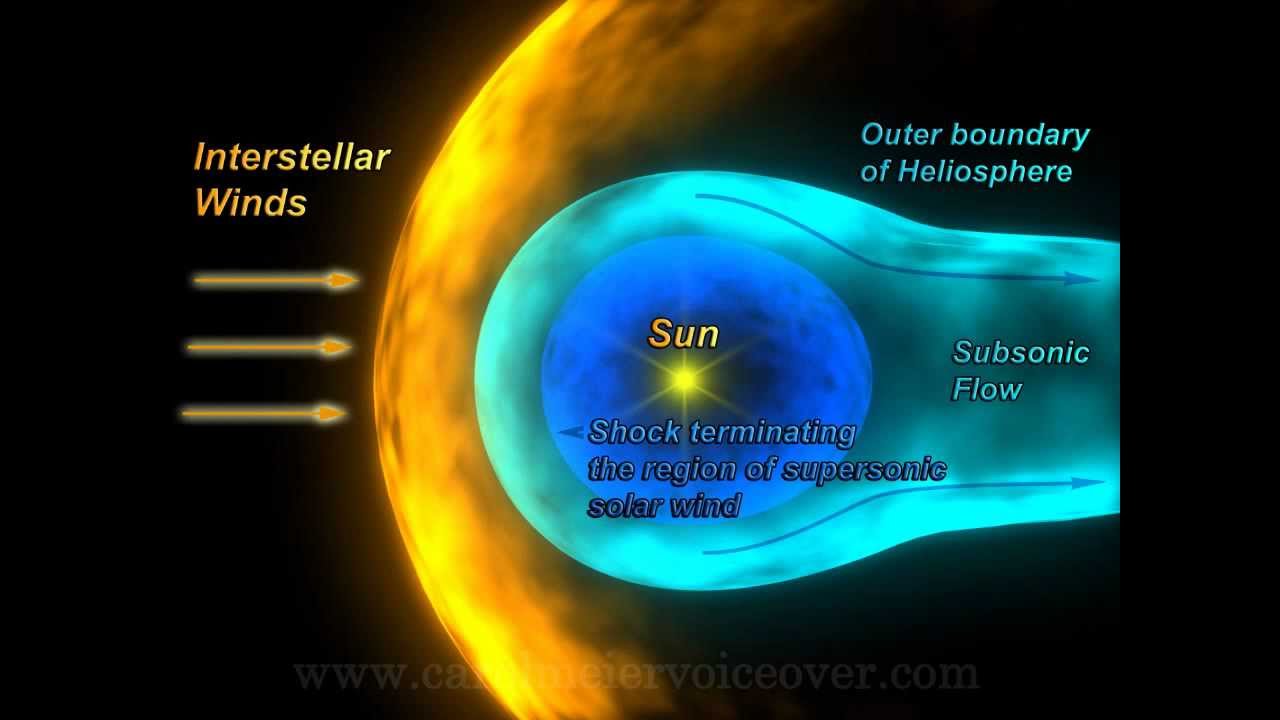
Voyager 1 Prepares To Leave Our Solar System After Travelling 11 Billion Miles Carl Sagan Science Solar System

10 Unbelievable Things You Probably Missed This Year Interstellar Voyager Spacecraft Voyage

Posting Komentar untuk "Voyager 1"